A journey through rebellion, reinvention, and the retail revolution that changed fashion forever.
🖤 [The Visionary: Rei Kawakubo’s Untamed Imagination]
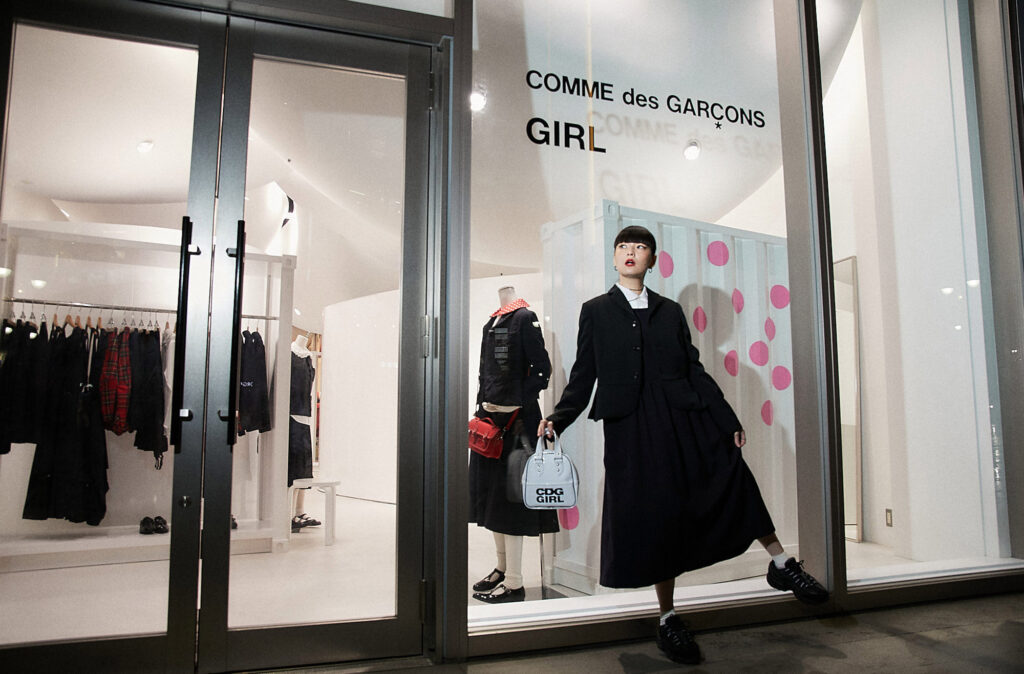
When Rei Kawakubo founded Comme des Garcons in Tokyo in 1969, the world wasn’t ready.
Her approach to clothing was not decorative or flattering—it was intellectual. She dismantled silhouettes, redefined proportion, and turned garments into questions about identity, gender, and beauty itself.
Kawakubo was never a traditional designer. She studied fine art and literature at Keio University, and her conceptual background became the root of her creative rebellion. Through her designs, she didn’t seek to please; she sought to provoke thought.
By the early 1980s, Comme des Garcons exploded onto the Paris fashion scene, challenging the norms of Western couture. Models walked in asymmetrical, frayed black clothing that critics described as “anti-fashion.” What others saw as destruction, Kawakubo saw as creation through chaos.
🏛️ [London: A City Built for the Unconventional]
If any city could understand Rei Kawakubo’s spirit, it was London.
With its history of punk, rebellion, and raw creativity, London has long celebrated those who dare to defy norms. From Vivienne Westwood’s anarchic boutiques to Alexander McQueen’s theatrical genius, the city thrives on cultural disobedience.
By the early 2000s, London’s energy was electric—a mix of high fashion, underground art, and emerging streetwear. For Kawakubo and her husband, Adrian Joffe, it was the perfect stage for their next experiment: not another runway collection, but a new way to experience fashion itself.
⚡ [The Birth of Dover Street Market]
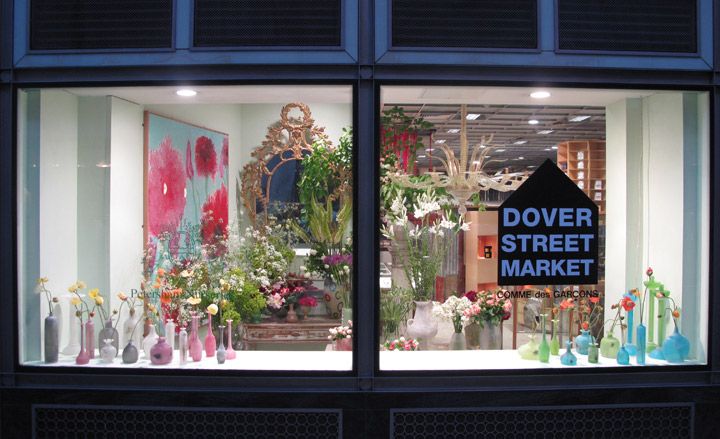
In 2004, inside a six-story Georgian building on Dover Street in Mayfair, Rei Kawakubo launched something the world had never seen before: Dover Street Market.
It was not a “store.” It was a marketplace for ideas—a place where art, commerce, and design could collide in what Kawakubo called “beautiful chaos.”
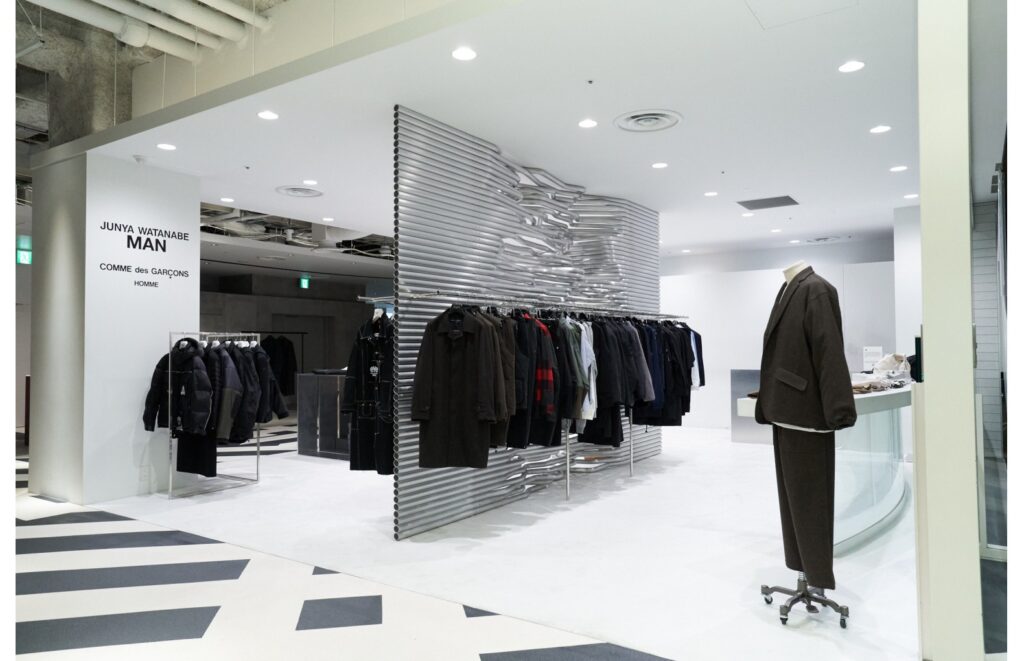
Gone were the polished marble floors and gold-plated interiors of luxury retail. Dover Street Market was raw, industrial, and alive.
Concrete floors, exposed pipes, steel beams, and reclaimed wood installations created a sense of unfinished art. Every corner was curated to surprise.
Brands didn’t merely display products—they told stories. The space changed constantly, as though breathing. Every visit felt like entering a new world, unpredictable and thrilling.
🎨 [The Philosophy of “Beautiful Chaos”
Rei Kawakubo once said, “I am not interested in clothes. I am interested in ideas.”
This statement defined not only Comme des Garcons but also Dover Street Market.
Every detail embodied the concept of contradiction—luxury and street, order and disorder, refinement and rawness. The store was built on tension, a reflection of Kawakubo’s lifelong belief that beauty is born from the clash of opposites.
Walls moved. Layouts changed. Installations appeared and disappeared.
No season looked the same twice. Even the staff were chosen for their individuality, not conformity.
This wasn’t shopping; it was participation in a creative ecosystem.
🧠 [Collaboration as Culture
Dover Street Market became a magnet for creativity.
Kawakubo and Joffe invited both emerging designers and established luxury houses to reinterpret what retail could mean.
The result was an explosion of collaborations that blurred the boundaries between art, fashion, and culture.
- Gucci, under Alessandro Michele, brought baroque romanticism into DSM’s industrial shell.
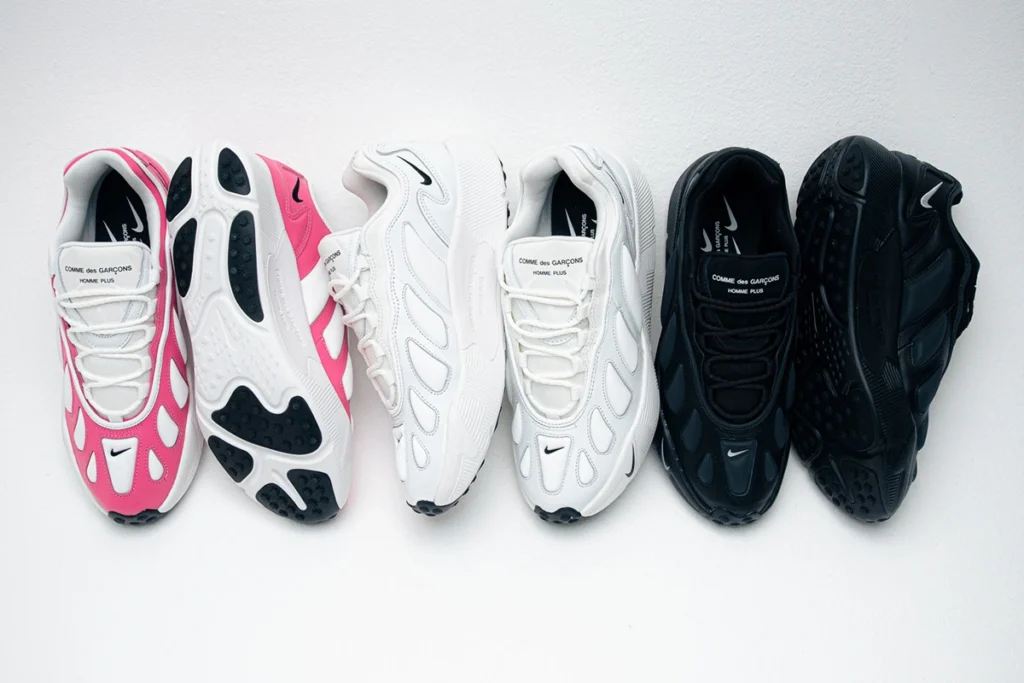
- NikeLab partnered with DSM for limited-edition sneakers that sold out within hours.
- Simone Rocha, Rick Owens, Alaïa, Craig Green, and Thom Browne all used DSM as a platform to experiment freely.
- Streetwear brands like Supreme and Palace stood proudly beside haute couture, symbolizing a new era where hierarchy dissolved.
This daring mix wasn’t just revolutionary—it became the blueprint for modern concept stores across the globe.
🌍 [The Global Expansion of a London Dream]
The success of the original London Dover Street Market was undeniable. Its mix of artistry and authenticity resonated with a new generation of consumers who wanted experiences, not transactions.
Soon, new DSM outposts began to emerge around the world:
- Tokyo (2006) – a return to Kawakubo’s homeland, where her conceptual roots ran deepest.
- New York (2013) – sprawling and experimental, echoing the city’s restless creativity.
- Beijing (2018) – blending local artistry with international avant-garde fashion.
- Los Angeles (2018) – a reflection of DSM’s influence on streetwear and celebrity culture.
- Singapore (2021) – minimalist yet bold, adapting the DSM spirit to Southeast Asia’s evolving scene.
Each store was unique, tailored to its cultural environment but always guided by Kawakubo’s principle of constant reinvention.
In 2016, the original London store relocated from Dover Street to Haymarket, taking the name and its loyal following with it. The spirit remained unchanged—dynamic, disruptive, and deeply artistic.
🕰️ [A Living Work of Art]
What makes Dover Street Market extraordinary is its refusal to stand still.
Twice a year, the store undergoes what Kawakubo calls a “Taché” — a total transformation. Displays are rebuilt, walls torn down, and entire sections reimagined.
This cycle of destruction and renewal mirrors Comme des Garçons’ design philosophy itself: the idea that creativity thrives in impermanence.
The experience is immersive.
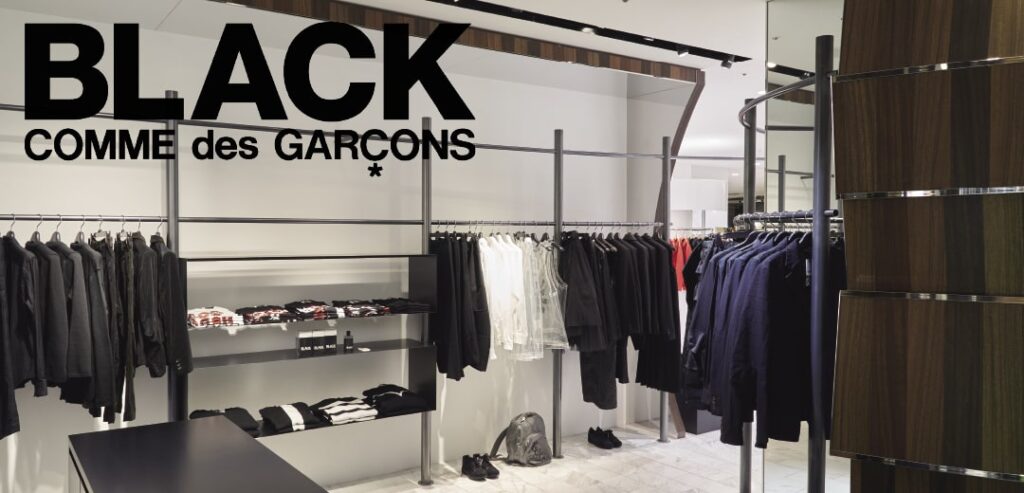
Walking through DSM feels like entering a gallery where art and commerce merge seamlessly. A Comme des Garçons coat might hang next to a hand-sculpted ceramic piece; a limited-edition sneaker might be displayed beside an avant-garde sculpture.
Every product, no matter the price, holds artistic value.
🖤 [London’s Love Affair with Comme des Garcons]
Londoners have always admired the unconventional, and Comme des Garçons found in them its most loyal admirers.
The brand’s intellectual edge and subversive elegance resonated with a city that thrives on individuality.
From fashion students at Central Saint Martins to established artists, musicians, and stylists, the British creative class embraced DSM not merely as a shopping destination but as a cultural institution.
Collaborations with local designers like Molly Goddard and Simone Rocha strengthened this bond, creating a cross-generational dialogue between Japanese conceptualism and British eccentricity.
💬 [The Influence and Legacy]
Critics have called Dover Street Market the future of fashion retail.
Its influence can be seen everywhere—from boutique galleries in Berlin to high-end concept stores in Seoul and Paris.
Fashion journalist Suzy Menkes described DSM as “the place where retail becomes theatre.”
And the late Virgil Abloh credited Rei Kawakubo with teaching the industry that “a store can be an art institution, not just a place to buy clothes.”
Through Dover Street Market, Kawakubo redefined what it means to sell fashion. She replaced commerce with culture and created a community bound by curiosity rather than consumption.
🛍️ [The Experience: More Than Shopping]
To step inside Dover Street Market is to surrender control.
You wander. You discover. You question.
The music changes with the mood. Installations hang from ceilings. Staff dressed in black offer quiet assistance, never intrusion. There’s a sense of mystery and magic, the feeling that you’re part of something secret, something alive.
Even the cafés within DSM—like the iconic Rose Bakery—feel like extensions of the brand’s philosophy: minimalist yet human, refined yet approachable.
Every element tells a story of carefully orchestrated imperfection.
🌸 [Comme des Garcons Play: The Symbol of Accessible Avant-Garde]
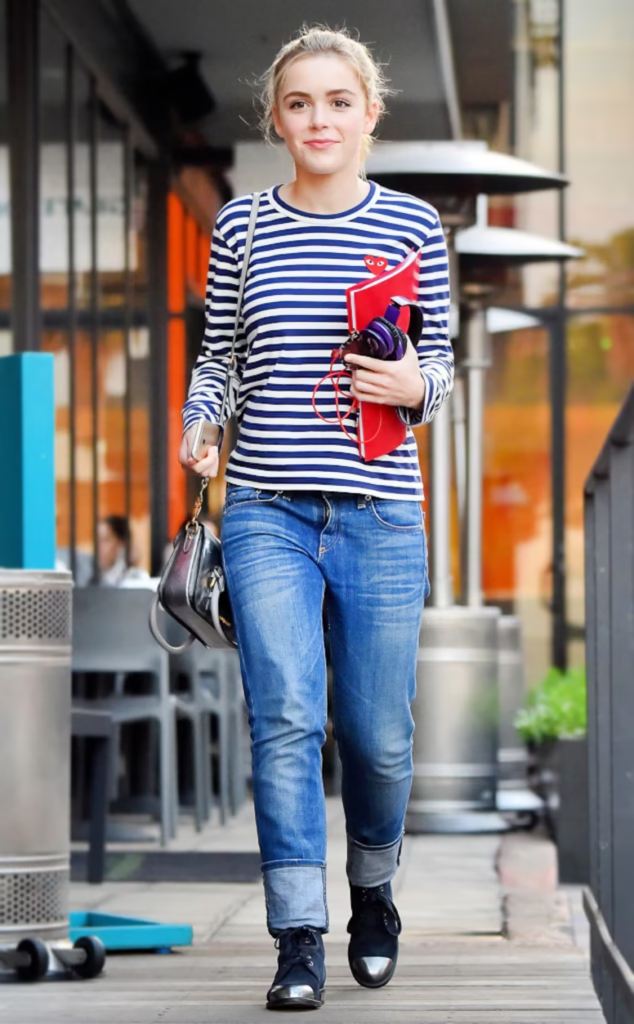
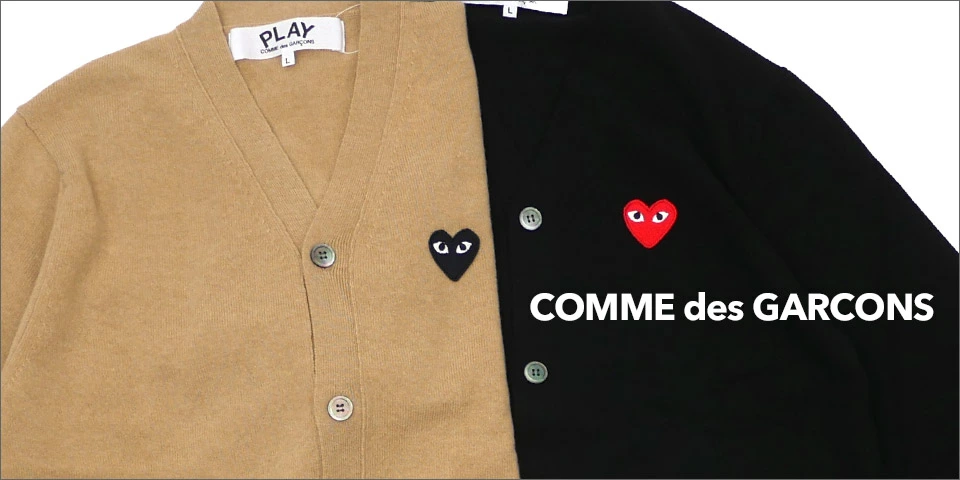
While the Comme des Garcons main line remains rooted in high-concept design, Comme des Garçons Play brought the label to a wider audience.
The now-iconic heart-with-eyes logo, created by artist Filip Pagowski, became a global symbol of playful rebellion.
Sold prominently through Dover Street Market, the Play line offers a more approachable expression of the brand—T-shirts, cardigans, and sneakers that carry Kawakubo’s DNA of simplicity and intellect.
It’s proof that even in accessibility, Comme des Garçons never loses its edge.
🪞 [Enduring Philosophy: Creation Without Compromise]
Rei Kawakubo has always resisted definition. She rarely gives interviews, avoids trends, and never seeks validation. Her power lies in mystery, in the refusal to explain her art.
Dover Street Market embodies that same philosophy.
It isn’t about what’s fashionable—it’s about what’s possible. It’s a reminder that fashion, at its core, is an exploration of the human condition: impermanent, imperfect, and infinitely expressive.
Through DSM, Kawakubo and Joffe built not just a store, but a living organism—one that thrives on contradiction and curiosity.
💫 [Legacy: The Future Born from the Past]
Today, more than two decades since its founding, Dover Street Market continues to inspire designers, curators, and entrepreneurs worldwide.
It has proven that true luxury lies not in exclusivity, but in authenticity.
That the future of fashion isn’t about selling clothes—it’s about creating culture.
From the streets of Tokyo to the art galleries of London, from the raw spaces of Haymarket to the neon glow of New York, Dover Street Market remains the heart of modern fashion’s evolution.
As Rei Kawakubo once said:
“Fashion should not be comfortable. It should disturb, challenge, and inspire.”
And that’s precisely what Dover Street Market has done—and continues to do.
🖤 Conclusion
Comme des Garçons in the UK is more than a story of expansion; it’s a story of transformation.
Through Dover Street Market, Rei Kawakubo reimagined what fashion could be—a bridge between commerce and art, tradition and rebellion, beauty and chaos.
London was the perfect birthplace for this revolution, a city that mirrored her spirit of fearless experimentation.
Today, Dover Street Market stands not just as a retail space, but as a symbol of freedom, artistry, and the enduring power of creative thought.
In a world of repetition, Rei Kawakubo chose reinvention.
In a world of noise, she built silence—and filled it with ideas.